Mosaic Stitching for Wide-Field Views
```html
Understanding Mosaic Stitching: The Art of Seamless Panoramas
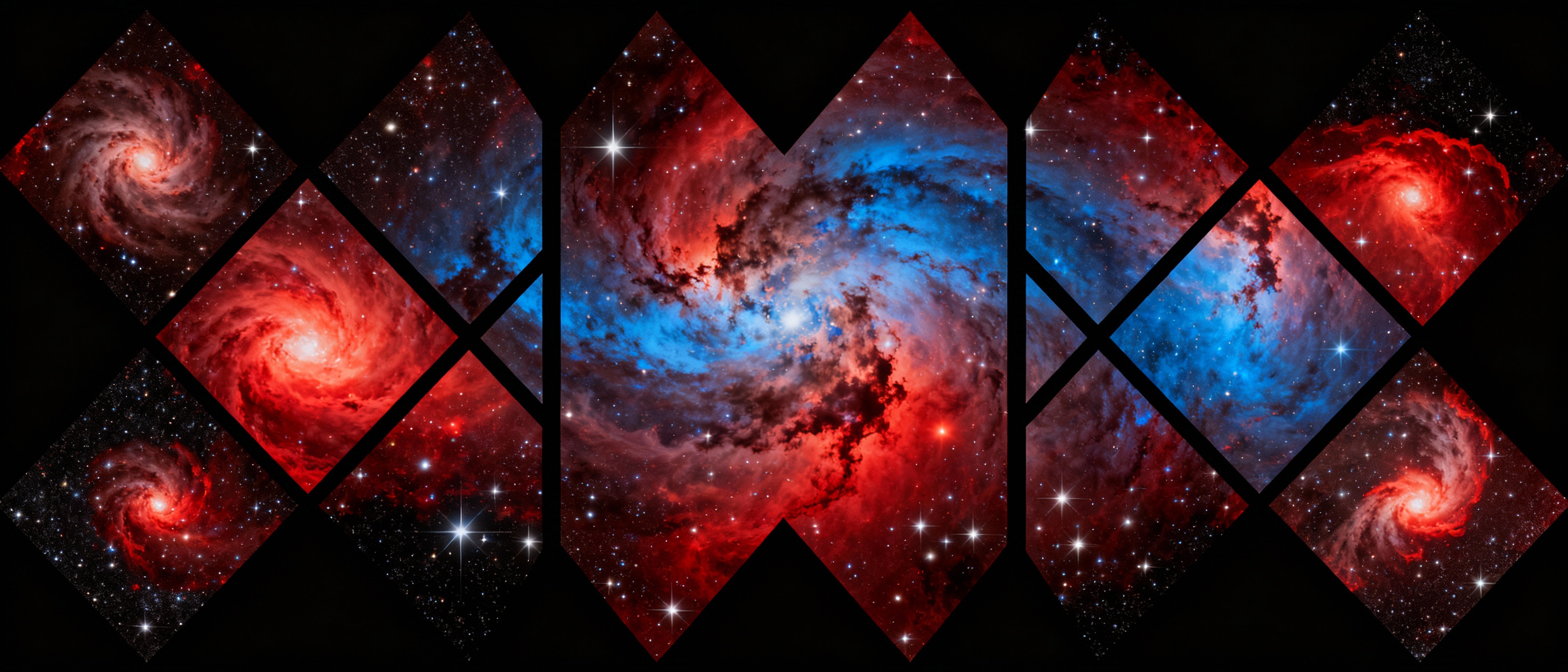
Mosaic stitching is a technique used to combine multiple overlapping images into a single, expansive view. Widely employed in astronomy, ecology, and landscape photography, it allows creators to transcend the limitations of lens focal length or sensor size. By digitally "stitching" smaller frames, the result is a high-resolution composite that reveals details invisible in individual shots. This method is particularly transformative for capturing wide-field views of the night sky, where celestial objects span vast distances yet demand precision.
The Technical Foundations of Wide-Field Imaging
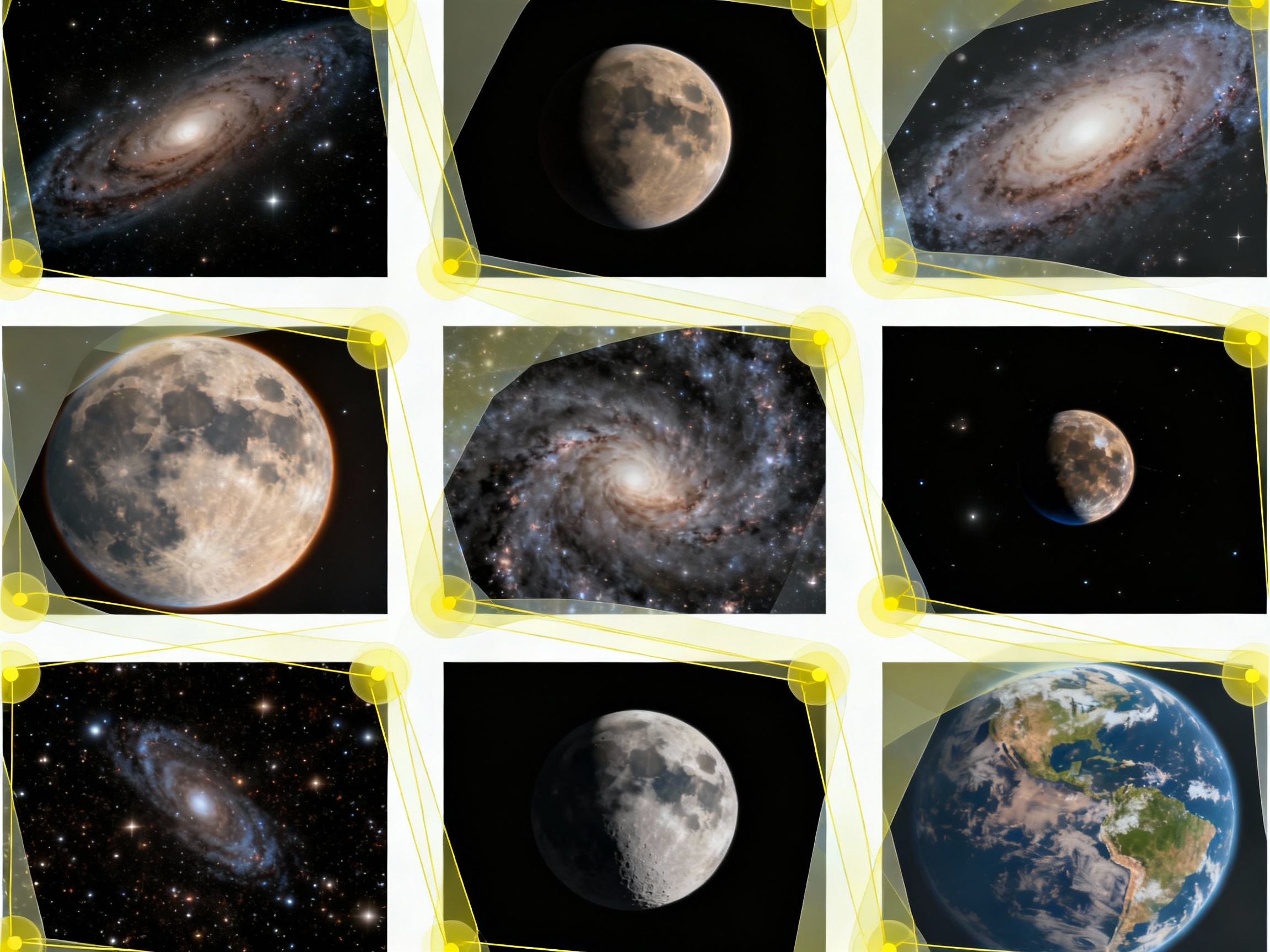
At its core, mosaic stitching relies on computational alignment and blending algorithms. Each image in the series must share overlapping regions—typically 15-30%—to allow software to match features. Key challenges include correcting lens distortion, compensating for exposure variations, and ensuring consistent color grading. Tools like adaptive histogram matching and gradient-domain blending help minimize visible seams. For astronomical applications, frame calibration (dark, flat, and bias frames) is critical to reduce noise and artifacts before stitching begins.
Tools and Software: From Astrophotography to Ecology
Popular software like Adobe Photoshop, PixInsight, and ICE (Image Composite Editor) dominate this space. Open-source alternatives like Hugin offer batch processing and lens model customization. For scientific applications, NASA’s FITS Liberator and AstroImageJ provide specialized support for astronomical data formats. Interestingly, the same principles apply to terrestrial uses—researchers stitch drone-captured forest canopy images to monitor biodiversity or merge microscope slides for detailed tissue analysis.
Overcoming Challenges: Light Pollution and Alignment Errors
Uneven lighting conditions—such as urban skyglow in astrophotography—can create vignetting effects that disrupt seamless blending. Solutions include gradient removal tools and synthetic flat frames. Misalignment often stems from parallax errors in ground-based photography or field rotation in untracked telescope shots. Advanced workflows now incorporate AI-driven feature detection (e.g., Scale-Invariant Feature Transform) to auto-correct mismatched edges while preserving resolution.
Case Study: Capturing the Andromeda Galaxy in Unprecedented Detail
In 2022, an amateur astrophotographer merged 142 exposures to create a 1.4-gigapixel mosaic of Andromeda. The project required a motorized equatorial mount to track celestial motion and 12 hours of cumulative exposure. Post-processing involved stacking each frame in Registax, stitching via PTGui, and final touch-ups in LightRoom to enhance HII regions. The result revealed satellite galaxies M32 and M110 with clarity rivaling professional observatory images.
The Future: AI and Real-Time Stitching Technologies
Emerging tools leverage neural networks to predict optimal seam placement and automatically adjust tonal balances. NVIDIA’s Canvas AI demonstrates how generative models can fill gaps in incomplete mosaics. On the horizon are real-time stitching systems for drone surveys and space telescopes, where latency-free processing enables immediate analysis of large-scale phenomena like solar flares or migrating animal herds.