Bulb Mode & Remote Trigger Techniques
```html
Understanding Bulb Mode: Beyond Standard Shutter Speeds
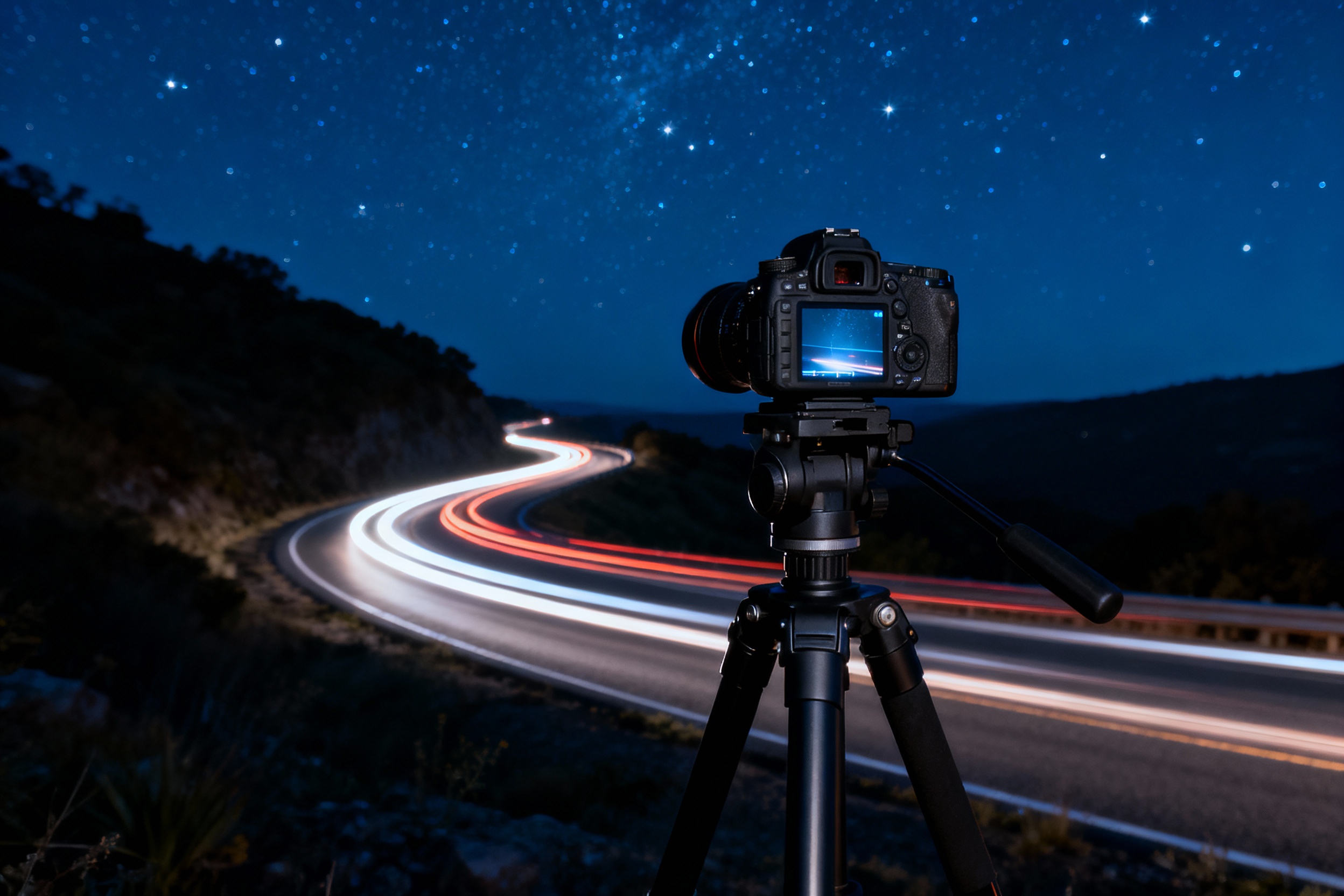
Bulb Mode is a camera setting that allows photographers to manually control the shutter speed beyond the predefined limits of their equipment. Unlike automatic modes, which cap exposures at 30 seconds or less, Bulb Mode keeps the shutter open for as long as the shutter button is held down. This feature is indispensable for capturing scenes requiring ultra-long exposures, such as star trails, light painting, or nighttime cityscapes. By relinquishing automation, photographers gain creative freedom to experiment with time and light in ways ordinary settings cannot achieve. However, mastering Bulb Mode requires patience, a steady setup, and an understanding of how exposure variables interact in low-light scenarios.
The Technical Mechanics of Bulb Mode
Bulb Mode operates by bypassing the camera’s internal shutter speed timer. When activated, the shutter opens at the first press of the button and closes only when released. This requires either a physical remote trigger or a wired release to avoid camera shake caused by manually holding the button. Modern cameras often include a digital countdown timer in Bulb Mode, displaying elapsed exposure time for precision. Key considerations include sensor heat buildup (which can introduce noise in exposures over several minutes) and the need for manual aperture/ISO adjustments to balance light intake. For optimal results, pairing Bulb Mode with neutral density filters or low ISO settings ensures clean, well-exposed images even in challenging lighting conditions.

Why Bulb Mode Matters for Creative Photography
Bulb Mode unlocks possibilities that standard modes stifle. For example, photographing fireworks demands split-second timing; with Bulb Mode, you can open the shutter as rockets launch and close it after bursts fade, layering multiple explosions into a single frame. Similarly, astrophotographers use it to capture star rotations without overexposing the Milky Way. Light painters wield it to “draw” with flashlights or sparklers, their movements etched into the image as vivid streaks. These techniques rely on the photographer’s intuition rather than automated calculations, fostering a deeper connection between artist and medium. The mode’s flexibility also aids in overcoming equipment limitations, enabling budget-friendly cameras to achieve professional-grade long exposures.
Remote Triggers: Precision Tools for Bulb Mode
Remote triggers eliminate the need to physically touch the camera during Bulb Mode exposures, preventing vibrations that blur images. Wired remotes offer basic click-and-hold functionality, while advanced wireless models include intervalometers for time-lapse sequences or multi-exposure blending. Smartphone-compatible triggers allow photographers to adjust settings via apps, ideal for hard-to-reach angles or studio setups. For niche applications like lightning photography, some remotes feature sound or motion activation, capturing split-second events with zero latency. Choosing the right trigger depends on budget, compatibility, and the intended use case—whether it’s a casual hobbyist shooting star trails or a professional needing millisecond accuracy for scientific imaging.
Advanced Techniques: Combining Bulb Mode with Filters
Neutral density (ND) filters are indispensable companions to Bulb Mode, reducing light intake to enable longer exposures in bright environments. A 10-stop ND filter, for instance, transforms a sunny midday scene into a dreamy, motion-blurred masterpiece with exposure times stretching to several minutes. Graduated ND filters balance exposure in high-contrast scenes like sunrises, while infrared filters create surreal monochromatic effects. For experimental work, combining Bulb Mode with colored gels or prism filters adds abstract layers to light trails. However, calculating exposure times with filters demands careful math: doubling the ND strength increases exposure time exponentially, requiring trial runs or exposure calculators to avoid under/overexposure.
Troubleshooting Common Bulb Mode Challenges
Bulb Mode’s manual nature invites pitfalls like accidental overexposure or battery drain. To mitigate these, use a fully charged battery or AC adapter for multi-hour sessions. Noise reduction settings help combat sensor heat artifacts but double processing time—a trade-off for image quality. In windy conditions, sandbagging tripods or using a weighted hook stabilizes the setup. For focus issues in darkness, switch to manual focus and use live view zoom to refine sharpness. Test exposures at high ISO can preview compositions before committing to a full-resolution shot. Lastly, always carry a flashlight and lens cloth for on-location adjustments during lengthy nighttime shoots.
Case Study: Capturing Star Trails with Bulb Mode
Star trail photography epitomizes Bulb Mode’s potential. In a recent project, a photographer used a 2-hour exposure at f/8 and ISO 200 to document Earth’s rotation as concentric star arcs over a desert canyon. A wireless remote with intervalometer automation split the shoot into 30-second frames to simplify noise reduction. Post-processing stacked the images using specialized software, enhancing celestial details while minimizing grain. Key takeaways included pre-focusing on a bright star using live view, masking ambient light pollution with a gradient filter, and scheduling shoots during moonless nights for optimal clarity. The resulting image juxtaposed the ephemeral beauty of the cosmos against the ancient geological formations below.