Nailing Manual Focus in Total Darkness
```html
Understanding the Importance of Manual Focus in Low-Light Conditions
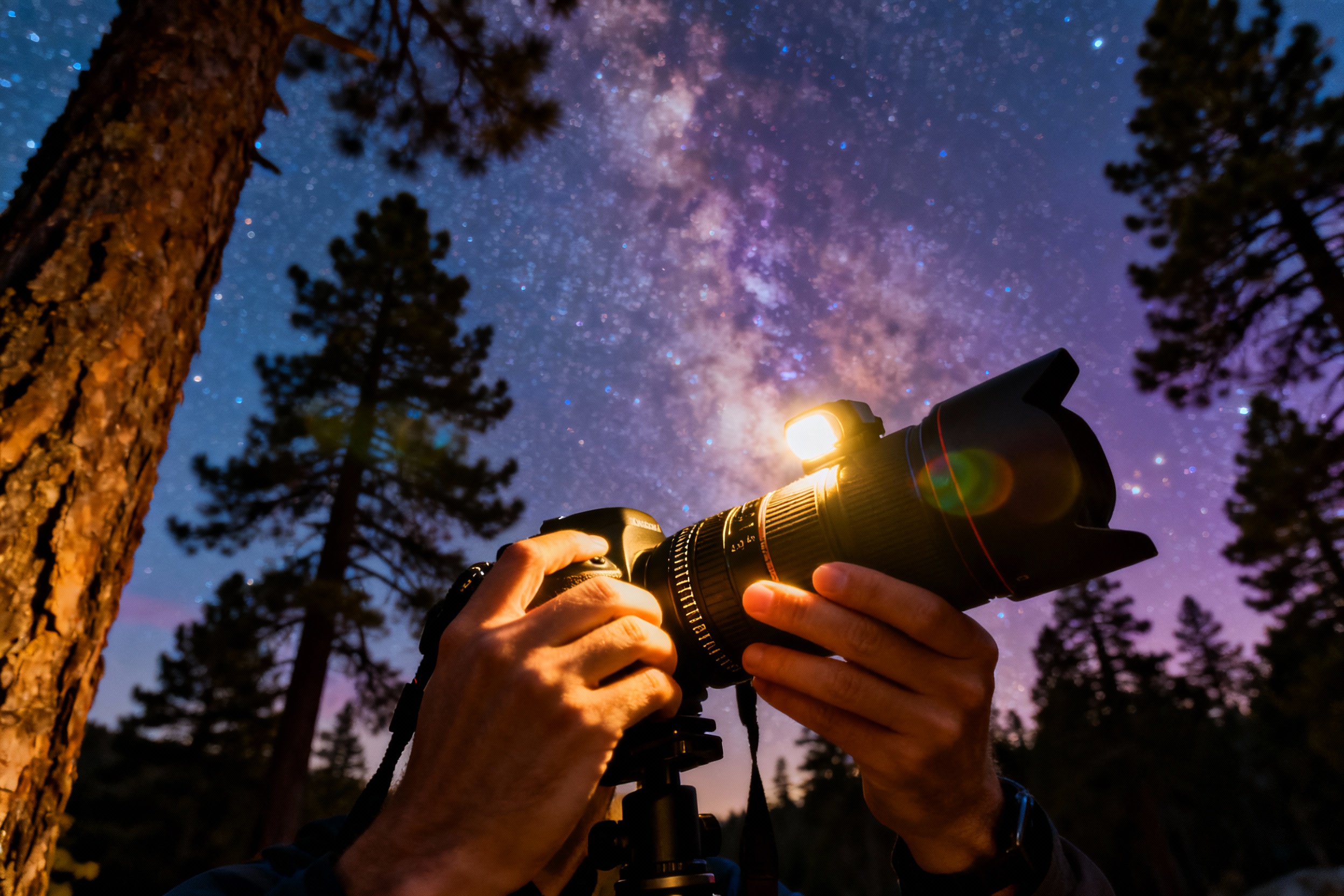
In environments where light is virtually nonexistent, autofocus systems often struggle to lock onto subjects. This is where manual focus becomes indispensable. Unlike autofocus, which relies on contrast detection or phase detection, manual focus hands control back to the photographer. In genres like astrophotography, nightscapes, or underground photography, precision in focusing can mean the difference between a blurred mess and a breathtaking image. Mastering manual focus in darkness isn’t just technical—it’s an art form that empowers creators to work beyond the limitations of technology.
The Unique Challenges of Focusing in Total Darkness
Focusing without light introduces obstacles unfamiliar to daytime photographers. The absence of visual cues, such as edges or textures, makes judging sharpness nearly impossible. Depth of field becomes trickier to estimate, and even slight miscalculations can render subjects blurry. Physical factors, like shaky hands or bulky gloves in cold environments, compound the difficulty. Understanding these challenges is the first step toward developing strategies to overcome them.
Essential Gear for Achieving Sharp Manual Focus Without Light
Equipping yourself with the right tools is half the battle. Fast prime lenses with wide apertures (e.g., f/1.4 or f/1.8) gather more light, aiding in focus calibration. Lenses with hyperfocal distance markings or hard stops at infinity are invaluable. A sturdy tripod eliminates handheld shake, while accessories like LED headlamps with adjustable brightness or infrared illuminators can provide subtle assistance without disrupting the scene.
Techniques to Harness Minimal Light Sources for Focus Assistance
Even in total darkness, trace light sources exist—a distant streetlamp, a smartphone screen, or the stars themselves. Use these to your advantage. For astrophotography, focus on a bright star or planet using live view zoom. In urban settings, position your subject near a faint light to create contrast. If available, use a flashlight to briefly illuminate the focus area, then switch it off before capturing the shot.
Using Tactile and Auditory Feedback to Gauge Focus Accuracy
When sight fails, rely on touch and sound. Many manual lenses have tactile markers for infinity focus or specific distances. Practice feeling the rotation of the focus ring to gauge movement. Some cameras offer focus confirmation beeps or vibrating focus aids—enable these to signal when the subject is sharp.
Practicing Manual Focus Drills in Simulated Dark Environments
Build muscle memory by practicing in controlled darkness. Set up a dim room and focus on objects with varying distances. Use blackout curtains to simulate night conditions. Over time, you’ll develop an intuitive sense of how far to turn the focus ring for specific scenarios, reducing guesswork during shoots.
Optimizing Camera Settings to Complement Manual Focusing Efforts
Pair manual focus with settings that maximize clarity. Use wide apertures to let in light but be mindful of shallow depth of field. Enable focus peaking if your camera supports it—it overlays colored highlights on in-focus areas. Set a high ISO temporarily to check focus, then lower it for the final shot to reduce noise.
Post-Processing Tricks to Salvage Slightly Missed Focus Shots
Even with meticulous focus, some images need rescue. Use software like Adobe Lightroom to apply selective sharpening or clarity adjustments. AI-powered tools like Topaz Sharpen AI can intelligently enhance details. For critical shots, focus stacking—blending multiple exposures—can ensure front-to-back sharpness.
Common Mistakes and How to Avoid Them in No-Light Scenarios
Rushing the process is a frequent error. Take time to verify focus with test shots. Avoid relying solely on infinity markers—they’re not always accurate. Check depth of field using apps like PhotoPills to ensure your subject falls within the sharp zone. Lastly, don’t ignore environmental factors like temperature, which can cause lens elements to shift slightly.
Real-World Applications: When Nailing Manual Focus in Darkness Matters Most
From capturing the Northern Lights’ delicate hues to documenting nocturnal wildlife, manual focus skills shine in specialized fields. Event photographers use these techniques during candlelit ceremonies, while archaeologists rely on them in unlit excavation sites. Each scenario demands adaptability and a deep understanding of the craft.
The Future of Low-Light Focusing Technology and Manual Techniques
Advancements like augmented reality overlays in viewfinders or AI-assisted focus tuning are on the horizon. However, manual focus will remain relevant—its reliability in extreme conditions cannot be fully replaced. Emerging tools will likely complement, rather than replace, the tactile skills honed by photographers today.